


YOUTH, CONSCIOUSNESS & MUTIRÃO
Updated: Dec 18, 2025
Beyond negotiations and policy briefs, COP30 reveals a deeper shift: youth leading a global movement grounded in responsibility, solidarity, and climate consciousness

Photo courtesy of the Children and Youth Pavilion at COP30
Inside the conference halls of COP30, the 2025 United Nations Climate Change Conference, young people are moving fast. They’re charting projects, hosting workshops, and connecting communities across the globe. They are part of #MutirãoCOP30, an initiative that turns the Brazilian concept, referring to collective effort to tackle shared challenges, into tangible climate action.
“Mutirão means no one moves forward alone,” said COP30 Youth Climate Champion Marcele Oliveira. “It’s about coordination between governments, youth, Indigenous peoples, and local communities. It’s a shift in how we relate to our environment and the policies that protect it.”
The initiative is part of the COP30 Action Agenda, launched in June 2025 with six pillars and 30 objectives to accelerate climate commitments. #MutirãoCOP30 maps projects from dense cities to rural communities, islands to tropical biomes, all connecting local solutions to global priorities.
“Young people don’t want symbolic participation. We want to influence the decisions that shape our future.”

Photo courtesy of the Children and Youth Pavilion at COP30
Youth and Indigenous Youth at the Center
At COP30, the presence of young delegates, particularly Indigenous leaders in their late teens and twenties, reshaped the atmosphere of the negotiations in ways that felt both overdue and unmistakably urgent.
Their impact was most visible in the Children and Youth Pavilion, a space fully designed and led by young professionals, student organizers, adolescent advocates, and the youth networks and NGOs that support them.


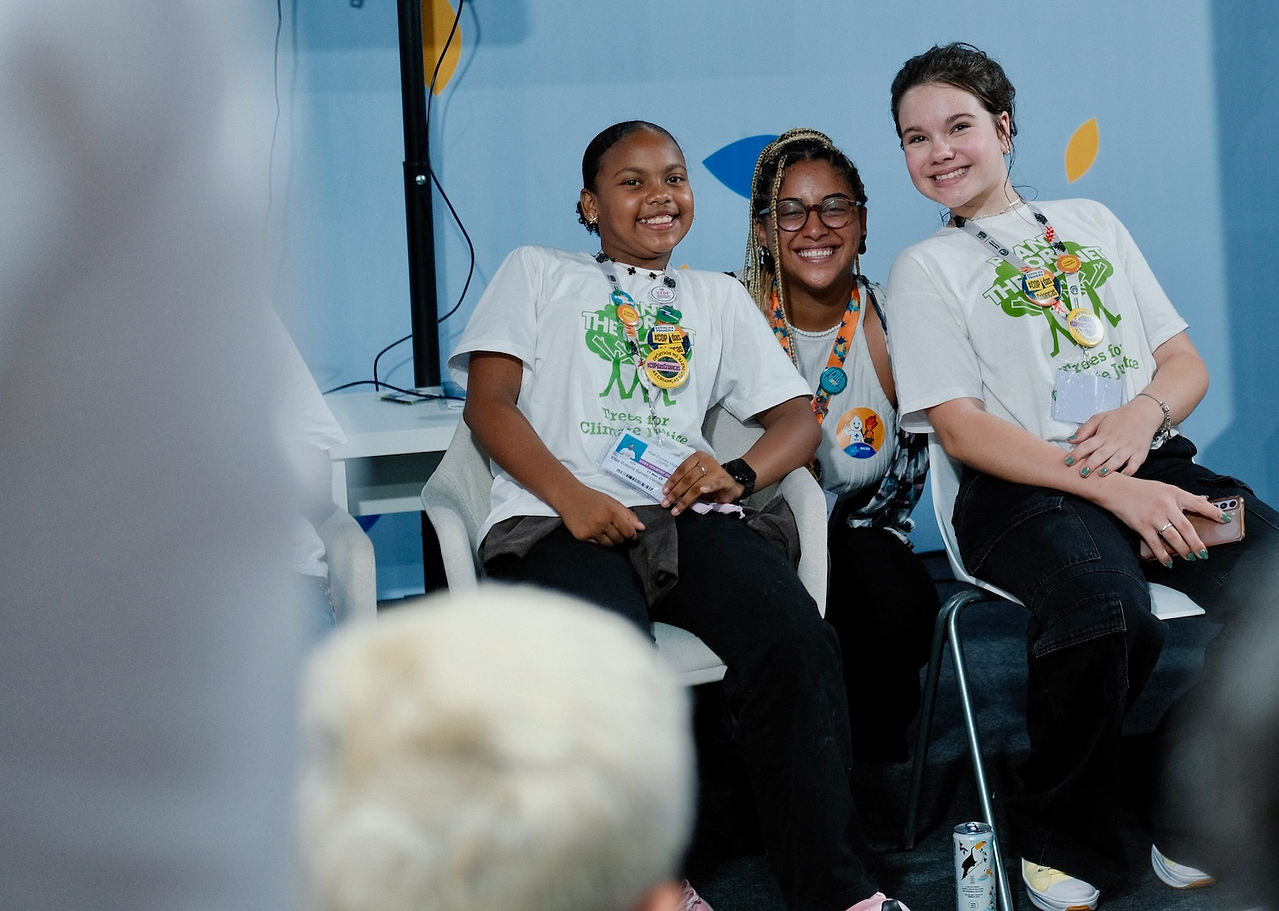
Photo courtesy of the Children and Youth Pavilion at COP30
Thalison Bruno Campos Corrêa, an Indigenous youth leader from the Amazon and one of the representatives coordinating the space in Belém, described its purpose clearly:
“The pavilion was created by young people, for young people. This is the space where ideas and solutions from youth all over the world come together to be part of the change…Our ancestors cared for this land long before climate summits existed. We’re here to make sure the world listens to that wisdom.”
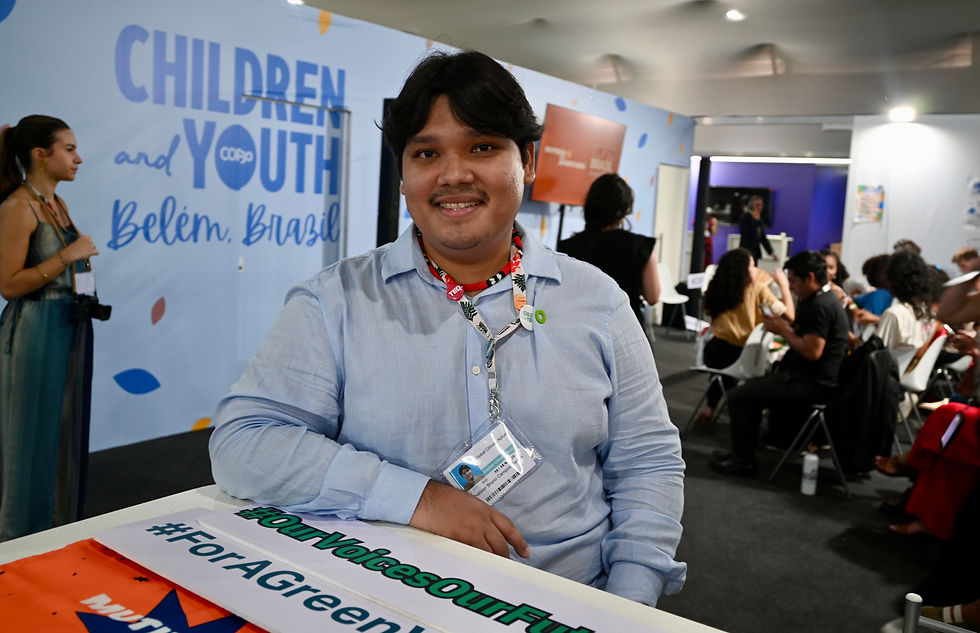
Thalison Bruno Campos Corrêa, an Indigenous youth leader from the Amazon | Photo by Alexandra Escobar
While institutional actors emphasized youth as a structural force in global climate governance, their participation underscored that climate policy is not only technical but cultural and intergenerational as well, shaped by long-standing relationships with the land. Any meaningful climate decision must reflect and honor that lineage.
Federal Deputy Célia Xakriabá affirmed this reality, noting that the space young people hold, especially Indigenous youth, is not something granted, but something won through years of organizing and resistance.
“The youth space isn’t offered, it’s conquered with a lot of fight. This Pavilion shows that you cannot discuss climate without centering diverse youth, including Indigenous youth.”

Célia Xakriabá, Federal Deputy | Photo by Alexandra Escobar
What Youth Are Asking For: The Terms of a Just Climate Future
Building on the work of previous conferences, youth at COP30 brought demands paired with concrete proposals aimed at shaping climate policy and governance.
Climate advocates repeatedly emphasized the need for direct access to finance, noting that while their initiatives are already delivering results, they cannot scale without dedicated and sustained funding.
Delegates also stressed that adaptation measures must respect Indigenous rights and territories, and that young people must be fully integrated into national climate planning and the NDC process rather than relegated to symbolic participation.
A fourth priority surfaced with equal urgency: the need for protection from climate disinformation, which young organizers identified as one of the greatest threats to public trust and long-term climate governance.
Brazil’s National Secretary of Youth Ronald Sorriso, captured this shift with unmistakable moral clarity, stating that this moment is fundamentally about the rights of a generation that did not design the systems responsible for the crisis:
“This is about the rights of youth, a generation that did not build the model that created COP30, climate change, or the capitalist system behind it. That’s why youth is rising up… We have the capacity and moral responsibility to act in the collective best interest.”
Similarly, 29-year-old Rosa Amorim, a Brazilian lawmaker elected at 26 and currently serving in the Legislative Assembly of Pernambuco State, emphasized the role of youth in shaping climate policy:
“Here, we don’t want to just hear about the challenges of climate change or the future of the planet. We, the youth, want to take part in deciding that future. Because talking about climate and the future is, above all, talking about youth, and about the present.”

Rosa Amorim, Member of the Legislative Assembly of Pernambuco | Photo by Alexandra Escobar
Climate Consciousness
If mutirão gave COP30 its structure, youth gave it its soul. Conversations about youth action kept gravitating toward a deeper layer of the climate struggle, one that rarely makes its way into negotiation rooms.
“Real climate action will only succeed when we recognise that it is not just an environmental issue but a consciousness issue,” says Ananya Tomar, 26, from Australia.
Her words cut through a space dominated by data and political positioning, capturing what many young delegates were trying to articulate: climate action isn’t just technical, it’s profoundly human.
In sessions once ruled by graphs and mitigation jargon, words like empathy, responsibility, care, and conscience surfaced with new weight, reflecting a shared belief that climate action is something lived, felt, and practiced in relationship with others.


Photo courtesy of the Children and Youth Pavilion at COP30
For Ananya, climate responsibility begins with how people see themselves in relation to the collective. Youth at COP30 weren’t acting as isolated advocates; they were contributors in a global mutirão, the sense that climate action only works when everyone carries the work together.
“The real shift happens when young people stop seeing climate action as an individual burden and start seeing themselves as part of a larger fabric of responsibility,” she explains.
Throughout COP30, youth embodied that understanding in action, insisting that the climate crisis is not just a technical failure but a relational one.
Collective action requires consciousness, shared responsibility requires empathy, and climate leadership demands that we feel accountable to more than ourselves.
Ananya adds: “When youth live as guardians, not owners, they embody the shift the world needs, from consumption to care, from ego to empathy.”
This article and our reporting from COP30 are supported by The VoLo Foundation. We’re deeply grateful to our partners who help us bring meaningful stories to life.


Comments