


A NEW WAY TO PLAY
Updated: Jul 21
What if building climate resilience starts not with policy but with a soccer ball? From the Dominican Republic to the Philippines, this global grassroots movement is showing how sport can reshape conservation and community identity.
By Kacie Brown

Photo courtesy of Play for the Mangroves
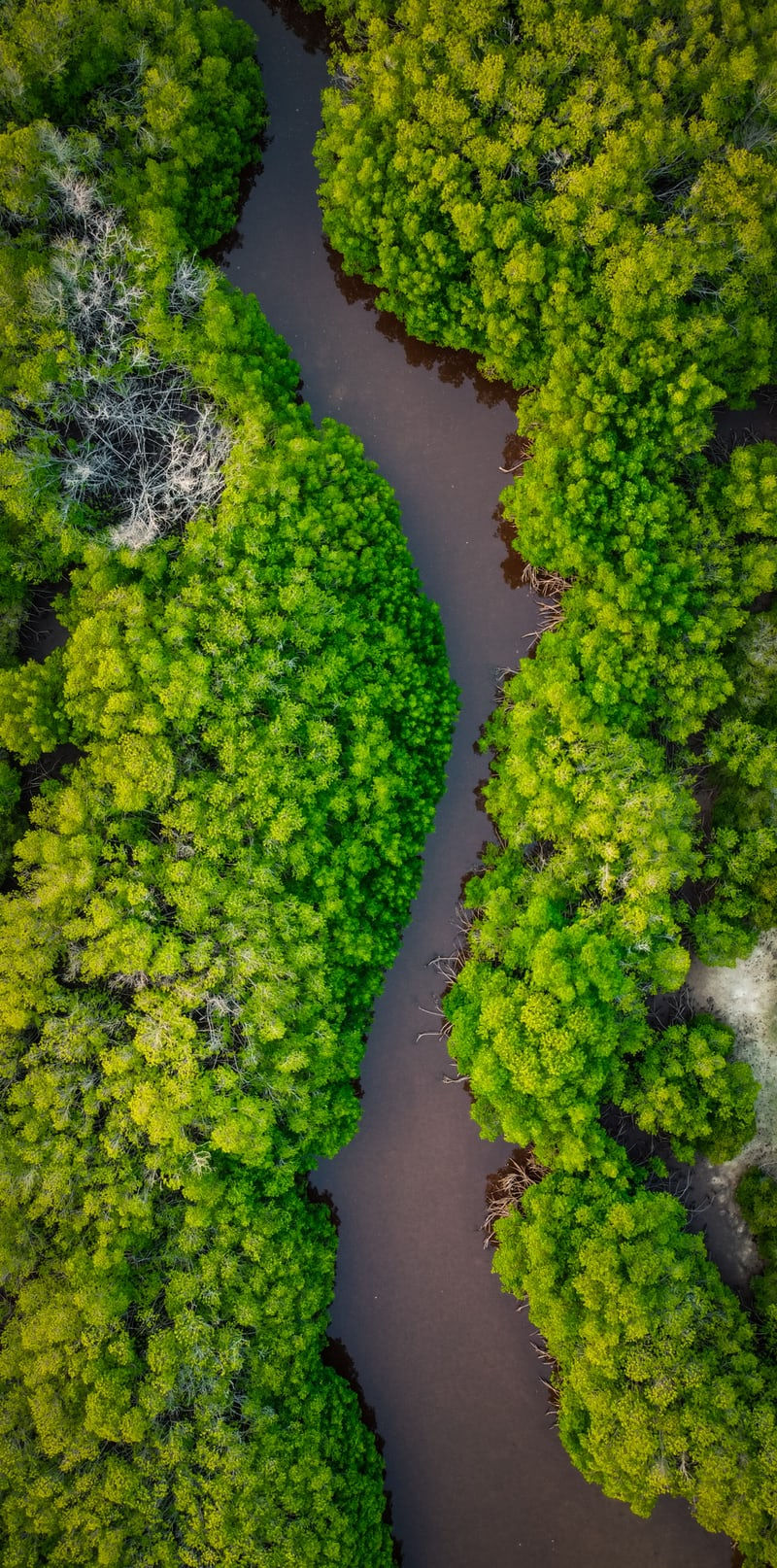
Filling the coasts of the Caribbean and stretching across the world’s warm-weathered regions, mangroves project fortitude through thick, interlaced roots anchored in saltwater. Their waxy green leaves catch the sun as they stabilize shorelines, shelter biodiversity, and quietly absorb carbon from the atmosphere. Yet these living coastal defenses are increasingly under extreme risk against pollutants, rising sea levels, and deforestation.
In 2024, the International Union for Conservation of Nature categorized half of the world’s mangroves as vulnerable, endangered, or critically endangered. The organization also credits mangroves with protecting 15.4 million people and $65 billion in property each year by buffering coastlines from storms, flooding, and erosion.
From his home in the Dominican Republic, Ismael Díaz-Tolentino has seen mangrove loss firsthand. Along with environmental changes, real estate and tourism developments threaten the trees that fortify local villages and wildlife.
Growing up in the beachside town of Baní, Ismael had two passions: sports and ecology. When a friend from the environmental conservation nonprofit Seacology approached him about developing an initiative that combined the two, Ismael was ready. He and Seacology founded Play for the Mangroves, a program that gives schools in coastal communities sports equipment, uniforms, and coaching. The only cost is participation in a mangrove restoration project.
Play for the Mangroves asks participating schools to pledge to be guardians of their local mangrove forest. The organization involves students in cleanup projects, mangrove planting and reforestation efforts, and environmental data collection. But they also just get students outside.
“We go bird watching. We see the trees. We walk around the mangroves. We discuss different topics. We even talk about school, grades, and stuff like that. We just want to be in the mangroves and enjoy that environment,” Ismael explains.
“We usually design some type of drill or game where the kids play and still have that sports spirit within that environment. So sometimes we bring a volleyball net. We set it up in the sand, and they play volleyball amongst the mangroves. Sometimes we just do little baseball or soccer games.”
Photos courtesy of Play for the Mangroves
Ismael says one of the biggest social challenges behind mangrove conservation is local attitudes toward the forests. He describes students in one Dominican Republic community’s first interactions with the mangroves.
“About 75% of them had never been in the mangroves, even though they were just 10 minutes from their school. They thought it was stinky, dangerous, and full of mosquitoes. Just by inviting them over, walking them through the mangroves, talking to them about how important they were and the species they saw, the little birds, all of their faces lit up,” Ismael says.
The program has spread beyond students, too. The nonprofit recently hosted a community 5K run in one Dominican Republic town that became unexpectedly popular.
“We were expecting about 50 people to show up. At the end of the day, about 200 showed up. The kids’ parents, their friends, their cousins, uncles, everyone just came out,” Ismael recalls.
“The mayor of the town also showed up, and he was so moved by the movement, the environment, and the people in the mangroves that he declared that town a mangrove town with its own protected area. That was a moment that we felt like, ‘This is actually making change, and we can feel it.’”
Play for the Mangroves has also seen change beyond the trees. The organization has programs in place on two Philippine islands, where administrators have described the shifting attitudes they’ve seen in students.
“School attendance is rising because of this program. Kids want to go to school because they want to be part of it, play table tennis, get their uniforms, and go on field trips. That’s powerful,” Ismael notes.
As Ismael described at the 2025 Green Sports Alliance Summit in Miami, where Play for the Mangroves received the alliance’s Community Impact Award, he sees replication possibilities for the program in any ecosystem. He says the dual benefits that come from uniting a community in play and care for its environment are profound.
“Sports really have the power to move people. They have the power to unite communities. They have the power to inspire action. They build character,” Ismael says. “When we connect all that power and we aim it towards the planet, I think we unlock something even greater.”


Comments