


THE BEE OR THE HIVE?
- Sep 9, 2025
- 3 min read
On the Blue Zone island of Ikaria in Greece, a beekeeper’s world reveals the island’s secrets of longevity and the timeless rhythm of life
Text & Photos by Leslie Ramos

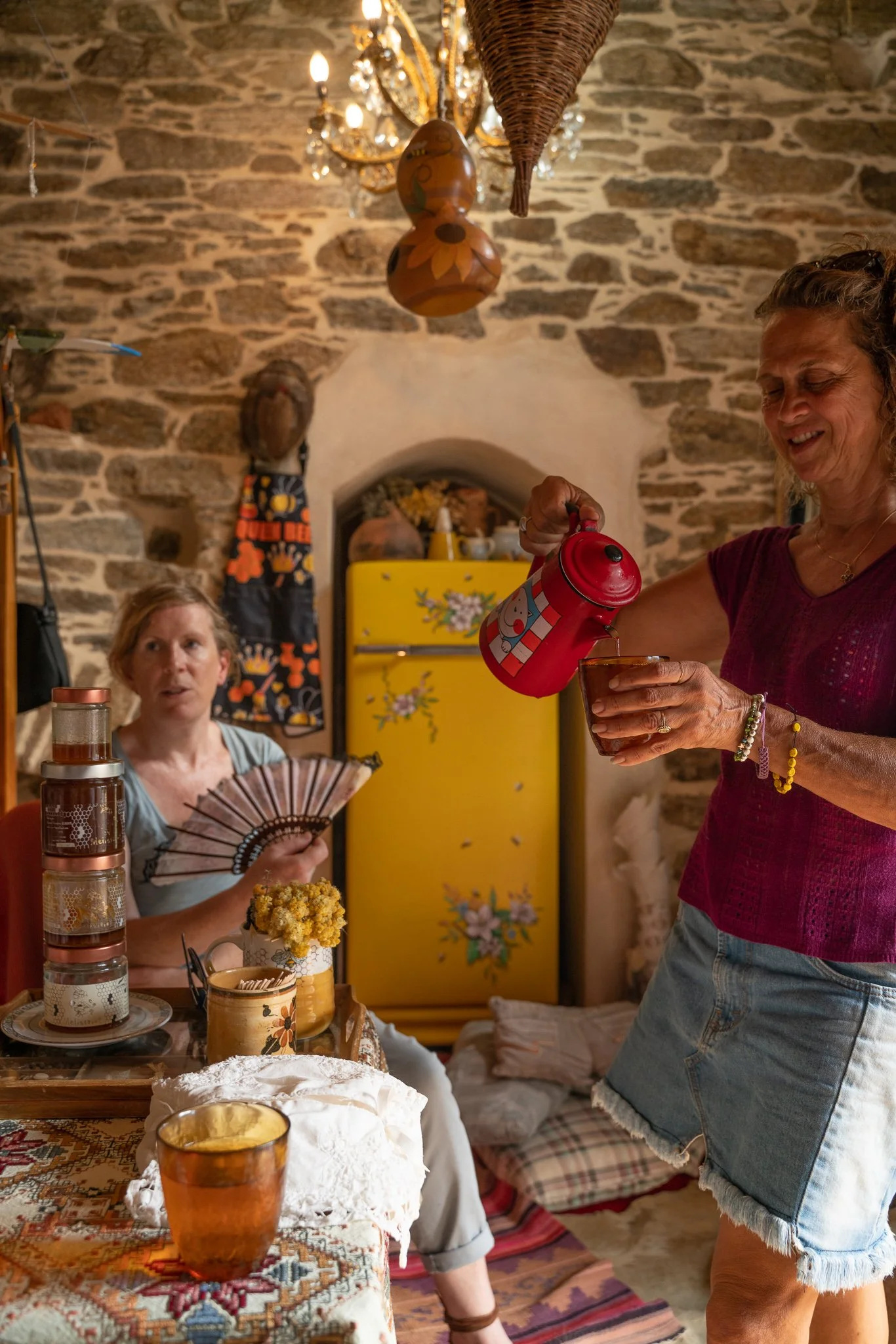
Inside a one-bedroom stone loft passed down for three generations, Elisabet invites visitors to step into her world — the beehive. Her collection of random items found around Ikaria, a Greek island in the Aegean Sea, brings a quirky personality to the earthen room.
I walked over goat skins and traditional woven fabrics layered on the floor to inspect a deep green vintage trunk filled with jars of honey. Every corner of the space held an oddity to discover: a bee made out of gold and jewels, a wooden wheel that looked a thousand years old, vintage beekeeping tools.
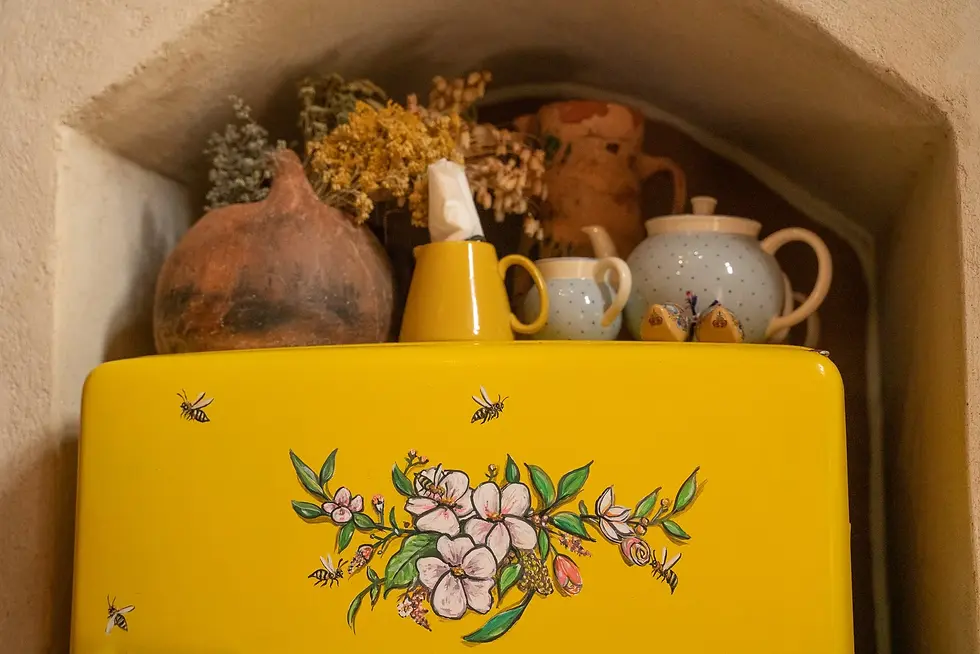
The centerpiece of the room was a yellow refrigerator from the 1950s, delicately painted with wildflowers and dainty bees. I imagined she curated her space like a pollinator, carrying home little findings.
We sat around a small table adorned with yellow flowers as Elisabet dove into the magic of bee alchemy while a kind Irish lady translated her raspy Greek into English. She explained that the process follows a queen who can live for up to seven years.
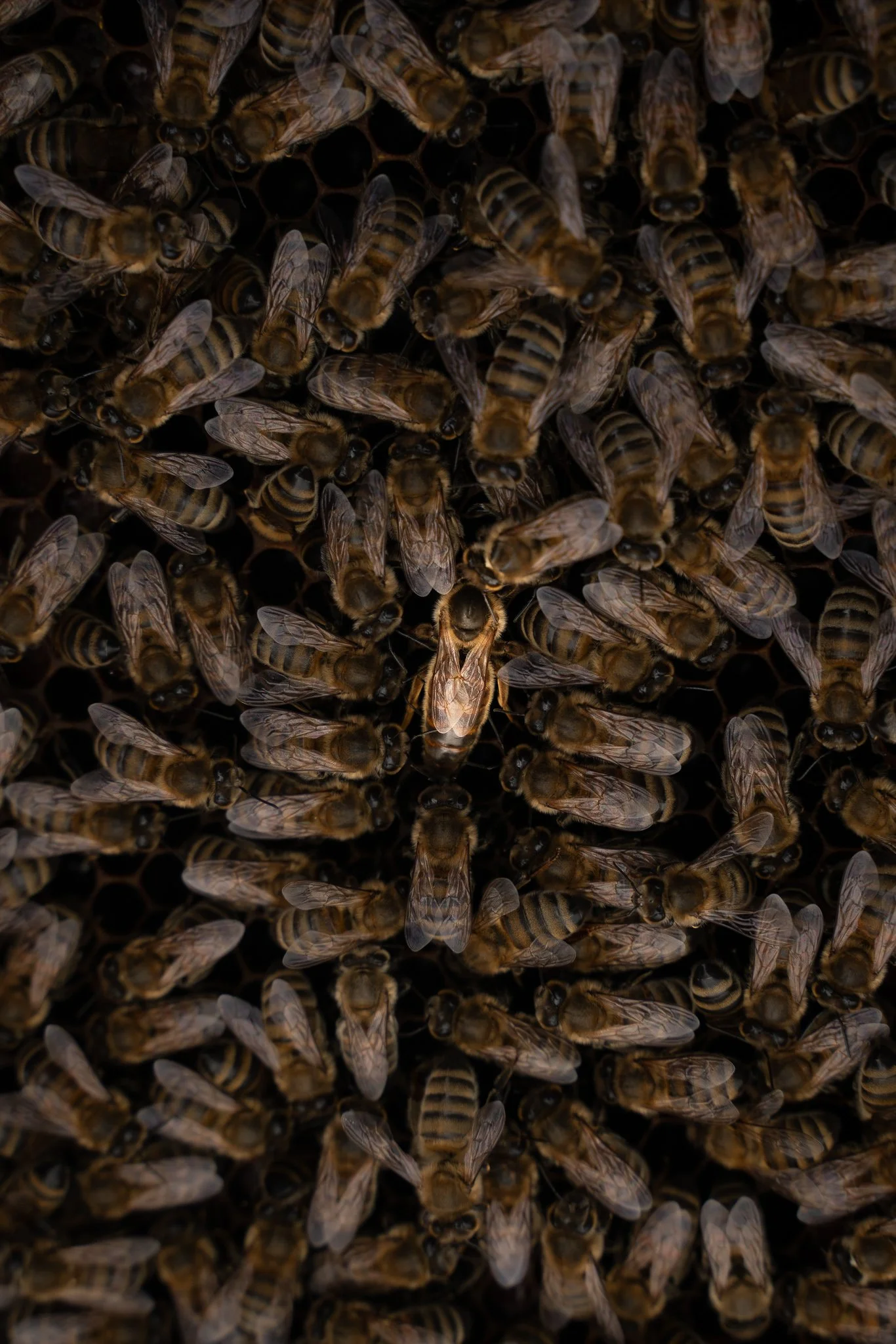
The queen rules her hive to the beat of a biological clock that has repeated in cycles for millions of years. As a beekeeper, Elisabet is in sync with this ancient song. She can read its rhythms and follow along, like it were the circular dance of the Icarian panigiri. A queen keeps tempo — laying eggs to grow her hive while the hatched workers fill the hexagonal pockets with pollen to make honey.
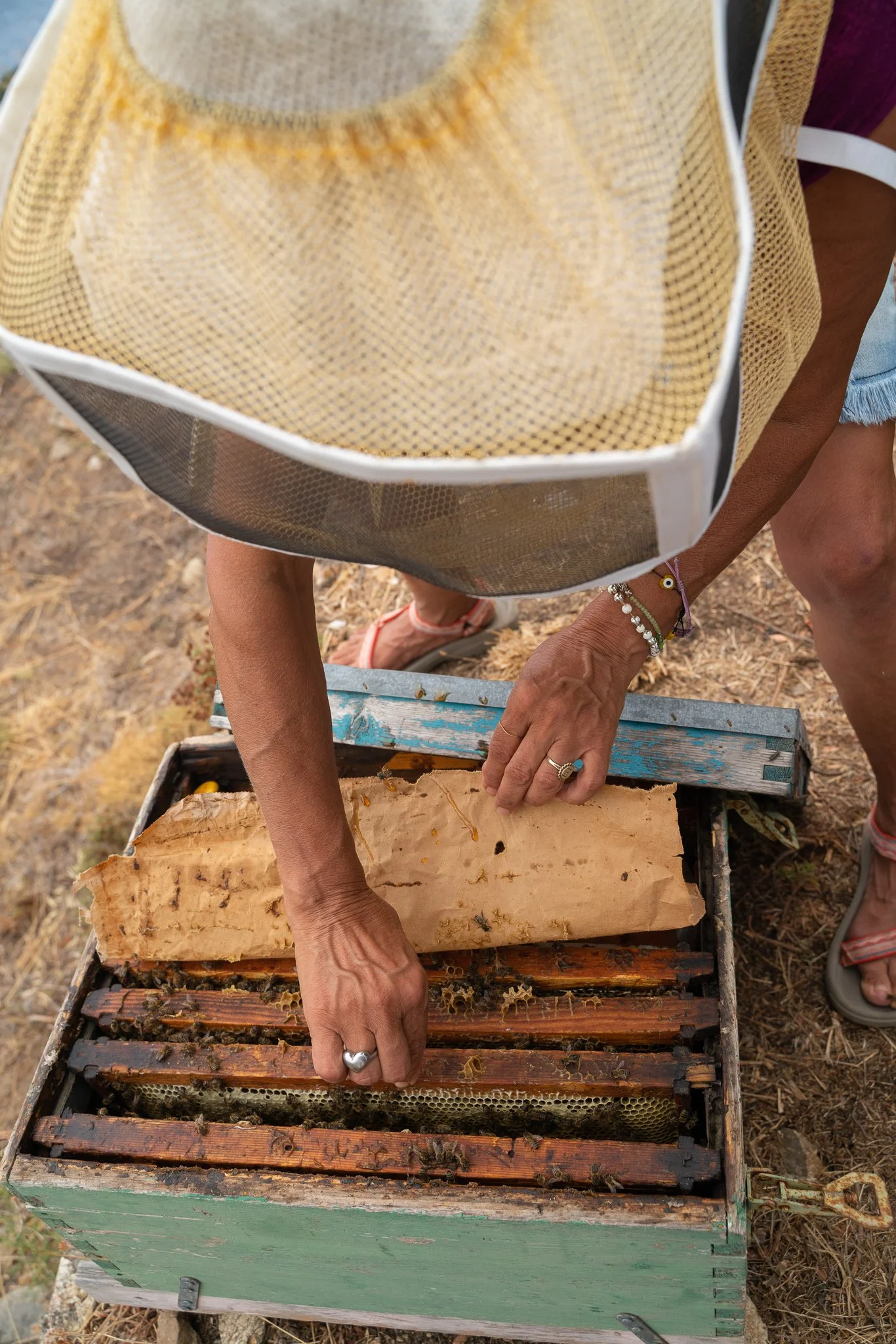
Each hive is a kingdom stored in a wooden box containing multiple panels, which the bees use as a frame to build their perfect combs.
Elisabet moves her hives around the island, following the bloom of each season’s flowers — from thyme in summer to heather in winter. Each one yields distinctly flavored honey. Her main role is hunting the blooms.
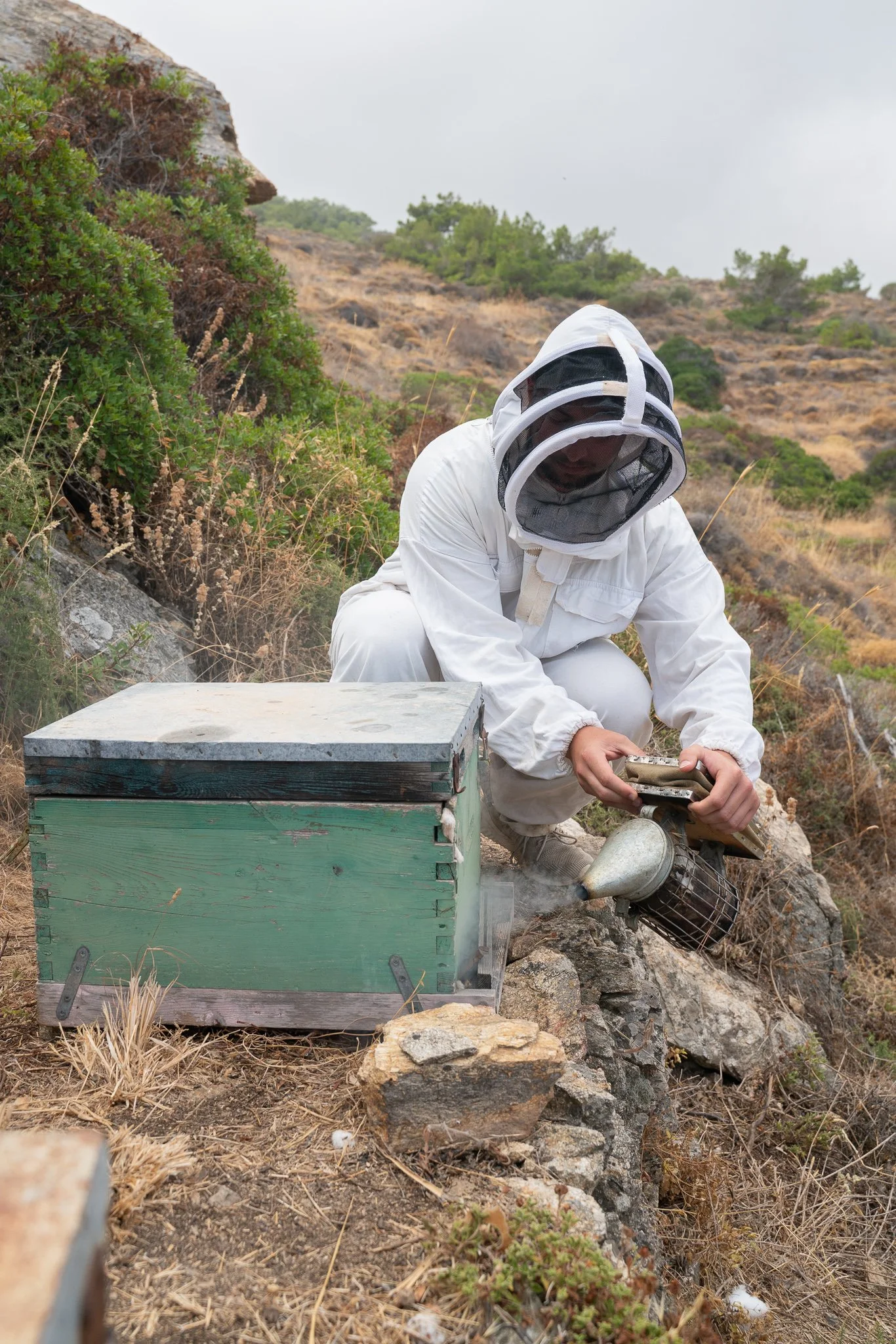
On her back, she carries each of her 50 hive boxes into the hills, placing them lovingly in the right spot at the right time. Pulled insatiably by the pollen, the bees work tirelessly, crossing gorges and valleys bursting with blooms, traveling up to eight kilometers a day but always returning home to the hive.
I asked how long the worker bees live, and she explained that in the summer, they work so hard they die after just one month. But in the calm of winter, when they work far less, they can live up to six months.
Ikaria is a “Blue Zone” — an area with a high concentration of people who live to be over 100 years old. Elisabet mentioned earlier, “Here, we aren’t slaves to time. The work gets done, but on our own terms.” Just like the bees, the relaxed pace of life lets their bodies last longer.
Once the kingdom becomes overcrowded, the queen lays her princesses. When they hatch, the queen takes part of the population and leaves the hive, forming a swarm of worker bees that surround her like a buzzing armor.
Elisabet showed us a video of how she scoops up handfuls of bees with her bare hands, digging through the swarm until she can find the queen and collect her into a wicker basket shaped like a waffle cone.
It’s the same kind of basket her grandfather used, and probably his grandfather before him. Once she coaxes the queen into her basket, the rest of the swarm willingly follows. She said this is her favorite part of the process.
It’s the only moment when she gets to physically connect with her bees — to feel their thousands of warm, buzzing bodies that together form one collective consciousness. I could feel her love for the hives. She rules her tiny kingdoms as a servant to them.
As we sat eating an apricot pie made with yogurt and summer honey, Elisabet told me that she recognized the symbol on my necklace. It was a gold circular charm with a sun that also resembled a compass, which I had assumed was meaningless. She held up her phone to show me an ancient Greek symbol — the flag of a fallen empire — identical to my necklace. I told her that I wore this necklace every day, not knowing it was Greek. She said,
“There are no coincidences. Everything happens for a reason.”


Comments